

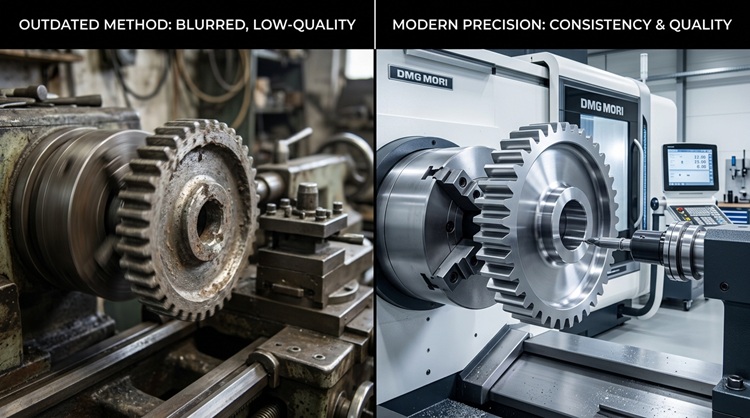
Gear manufacturing involves several machining stages, and each one contributes to the quality of the finished component. Accurate tooth geometry is essential for smooth engagement, reliable power transmission, and dependable performance. Selecting suitable cutting and finishing tools can therefore have a direct impact on production results.
Manufacturers need to consider the gear design, material, required tolerances, machine capabilities, and production volume when choosing tooling. The right solution can help maintain consistency while reducing avoidable machining problems.
Table of Contents
Why Gear Tooth Accuracy Matters
A gear must interact correctly with its mating component. Variations in tooth profile, dimensions, or surface quality can lead to vibration, noise, uneven wear, and reduced operating performance.
Carefully planned machining can help manufacturers achieve:
- Accurate tooth geometry
- Consistent dimensions
- Smooth tooth engagement
- Reliable repeatability
- Improved surface quality
- Efficient production
The tooling used during shaping and finishing plays an important role in achieving these objectives.
Understanding Gear Shaping
Gear shaping is a machining process used to generate gear teeth through a controlled reciprocating cutting movement. It can be suitable for certain internal and external gear configurations where other processes may not be practical.
A gear shaper cutter works with the gear blank to progressively create the required tooth profile. Cutter selection depends on specifications such as module, pressure angle, tooth count, workpiece material, and machine configuration.
Choosing a suitable cutter helps manufacturers maintain the required geometry throughout production.
The Purpose of Gear Shaving
After gear teeth have been generated, additional finishing may be required to achieve the desired surface quality and dimensional consistency. Gear shaving is one process used for this purpose in suitable applications.
A shaving cutter removes a small amount of material from the gear tooth surface. This finishing operation can help improve surface characteristics and correct minor variations created during earlier machining stages.
The suitability of shaving depends on the gear design, production requirements, material, and desired finished quality.
Selecting the Right Tooling
Manufacturers should evaluate several factors before choosing gear cutting or finishing equipment.
Gear Specifications
Module, pressure angle, tooth count, dimensions, and tooth geometry all influence tooling requirements.
Workpiece Material
Different materials can create different machining demands, so the tool should be appropriate for the material being processed.
Machine Compatibility
The cutter must be suitable for the machine’s operating capabilities and setup.
Production Requirements
Manufacturers producing large quantities may require tooling that delivers reliable results over extended production periods.
Accuracy and Finish
The required dimensional accuracy and surface finish should be considered before selecting the machining process.
Maintaining Consistent Results
Tool condition can influence finished gear quality. Regular inspection can help identify wear before it begins to affect tooth geometry or surface finish.
Correct machine setup is equally important. Alignment, workholding, cutting conditions, and tool positioning should be checked carefully to support repeatable machining.
Proper storage and handling can also help protect cutting edges and maintain tool condition between production cycles.
Choosing an Experienced Tooling Provider
The right tooling partner can help manufacturers identify solutions based on their actual production requirements. Technical knowledge is especially valuable when gears have demanding specifications or unusual configurations.
SS Tools provides gear cutting solutions for industrial applications. Manufacturers can assess available tooling according to their gear design, machining process, machine capabilities, and production objectives.
Improving the Gear Manufacturing Process
Quality gear production involves more than selecting a cutter. Manufacturers can improve consistency by combining suitable tooling with accurate machine setup, controlled operating conditions, regular inspections, and proper maintenance.
Monitoring finished gears can also provide useful information about tool performance and machining conditions. This can help manufacturers make informed decisions when replacing or selecting future tooling.
Conclusion
Accurate gear production requires careful attention to both tooth generation and finishing. A suitable gear shaper cutter can help create precise tooth profiles, while a properly selected shaving cutter can support finishing requirements where the shaving process is appropriate.
By considering gear specifications, workpiece material, machine compatibility, production volume, and required finish, manufacturers can choose tooling that supports consistent quality and dependable gear performance.